
Affiliate Disclosure: This article contains affiliate links. If you buy through one of them we may earn a commission, at no extra cost to you. We only recommend products we genuinely believe in.
Medical Disclaimer: This content is for informational and educational purposes only and is not medical advice. Always consult a qualified healthcare professional before making health decisions or starting any new treatment.
The military just announced mandatory testosterone screening for all troops over 30. The headline made me curious enough to book my own blood test. I am 31, I work out regularly, and I eat reasonably well. I did not think I had a problem.
I was wrong.
Why the Military Is Testing Everyone Now
On July 15, Defense Secretary Pete Hegseth announced that the U.S. military will screen all active-duty service members aged 30+ for testosterone deficiency as part of their annual health exam. The announcement sent “military testosterone” searches up 4,750% in a single day.
The reason is simple: testosterone levels in men have dropped more than 50% in the last 50 years. A 2025 study analyzed over 1 million men and found the decline is not just because people are getting older or heavier — it is happening across the board, independent of age and BMI.
For the military, this is a readiness issue. But for the rest of us, it is a health issue that most men do not think about until something feels off.
My Test Results
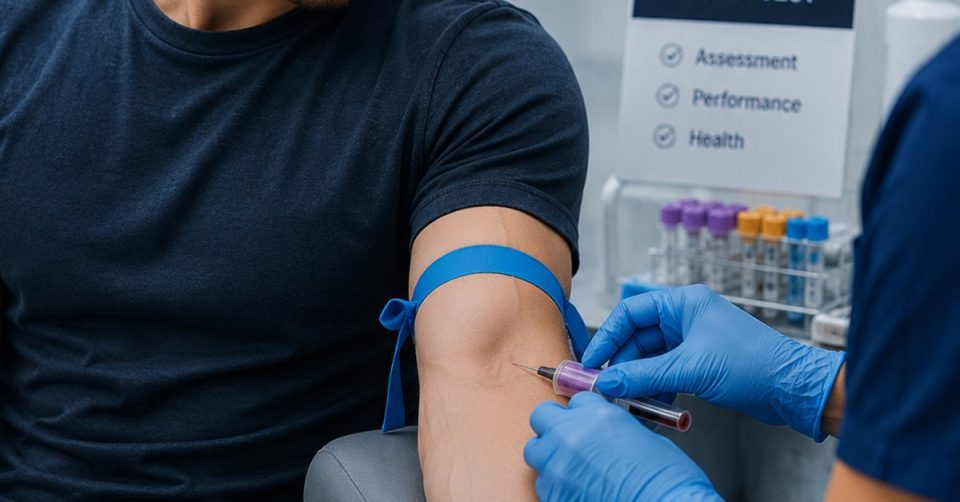
I went to my primary care doctor and asked for a testosterone panel. The test is simple: a fasting blood draw, ideally between 7 and 10 in the morning when testosterone peaks.
My total testosterone came back at 387 ng/dL. The “normal” range is 300-1,000 ng/dL, so technically I was in range. But the American Urological Association says a formal diagnosis of low testosterone requires two separate morning tests below 300 ng/dL — and my number was not far above that threshold.
More importantly, I had symptoms: I had been feeling more tired than usual, my motivation at the gym had dropped, and I had been sleeping worse for months. These are classic signs of suboptimal testosterone, even if you technically fall within the “normal” range.
What Low Testosterone Actually Does to Your Body
Testosterone is not just about sex drive. It affects nearly everything:
- Energy and fatigue — the most common complaint
- Muscle mass — testosterone drives muscle protein synthesis
- Body fat — low testosterone is linked to increased visceral fat
- Mood — depression, irritability, and reduced motivation
- Sleep — poor sleep suppresses testosterone, and low testosterone worsens sleep. It is a vicious cycle.
- Brain fog — difficulty concentrating, reduced mental clarity
The military’s own data shows this is especially bad in high-stress jobs. Special Forces troops have testosterone levels comparable to 80-year-old men by age 35. But you do not need to be in combat to be affected — chronic stress, poor sleep, and caloric deficit all suppress testosterone, and most working adults deal with at least one of these.
What I Did About It (Without TRT)
My doctor recommended lifestyle changes before even considering testosterone replacement therapy (TRT). Here is what actually moved the needle:
1. Fixed My Sleep
I was averaging 5.5 hours per night. Studies show that sleeping 5 hours for just one week can reduce testosterone by 10-15%. I committed to 7-9 hours, no screens after 10 PM, and blackout curtains. Within two weeks, my energy improved noticeably.
2. Lifted Heavy Things
Resistance training is the most effective natural testosterone intervention. I switched from mostly cardio to compound lifts — squats, deadlifts, bench press — 4 days per week. The acute testosterone response from heavy compound movements is well-documented.
3. Stopped Under-Eating
I was in a caloric deficit for months trying to lean out. Extreme dieting suppresses the hypothalamic-pituitary-gonadal axis — the same mechanism the military identified in their troops. I increased my calories to maintenance and made sure I was getting enough zinc, vitamin D, and dietary fat.
4. Managed Stress
Cortisol and testosterone are inversely related. I added 10 minutes of meditation per day and reduced caffeine after 2 PM. Not dramatic changes, but they added up.
My Retest After 8 Weeks
After 8 weeks of these changes, I retested. My total testosterone went from 387 to 542 ng/dL. My free testosterone also improved. More importantly, the symptoms — the fatigue, the brain fog, the low motivation — were significantly better.
No medications. No TRT. Just sleep, lifting, food, and stress management.
Should You Get Tested?
Frequently Asked Questions
What should I do if I notice these symptoms?
If you notice any of the symptoms discussed in this article, schedule an appointment with your doctor. Early detection and treatment can prevent complications. Do not wait for symptoms to worsen.
How common is this condition?
This condition affects millions of people worldwide. According to the CDC, prevalence has increased significantly in recent years. You are not alone, and effective treatments are available.
Can this be prevented?
While not all cases are preventable, lifestyle changes including regular exercise, a balanced diet, adequate sleep, and stress management can significantly reduce your risk. Talk to your doctor about personalized prevention strategies.
If you are over 30 and experiencing any of these, it is worth asking your doctor for a testosterone panel:
- Persistent fatigue that sleep does not fix
- Decreased sex drive
- Difficulty building or maintaining muscle
- Increased body fat, especially around the midsection
- Mood changes, irritability, or low motivation
- Brain fog or difficulty concentrating
The test costs about $30-50 without insurance. A single low number does not mean you need TRT — but it gives you a baseline to work from. And if your levels are low, lifestyle changes alone can often bring them back up.
The military is onto something here. Knowing your numbers is the first step — what you do with them is up to you.
Related: Read more in Fitness and Diet and Mental Health
Sources
- AP News: Hegseth Announces Testosterone Screening
- Systematic Review: Testosterone Decline in 1M+ Men
- TRAVERSE Trial: Cardiovascular Safety of TRT
Last updated July 16, 2026.
