
Affiliate Disclosure: This article contains affiliate links. If you buy through one of them we may earn a commission, at no extra cost to you. We only recommend products we genuinely believe in. As an Amazon Associate I earn from qualifying purchases.
Medical Disclaimer: This content is for informational and educational purposes only and is not medical advice. Always consult a qualified healthcare professional before making health decisions or starting any new treatment.
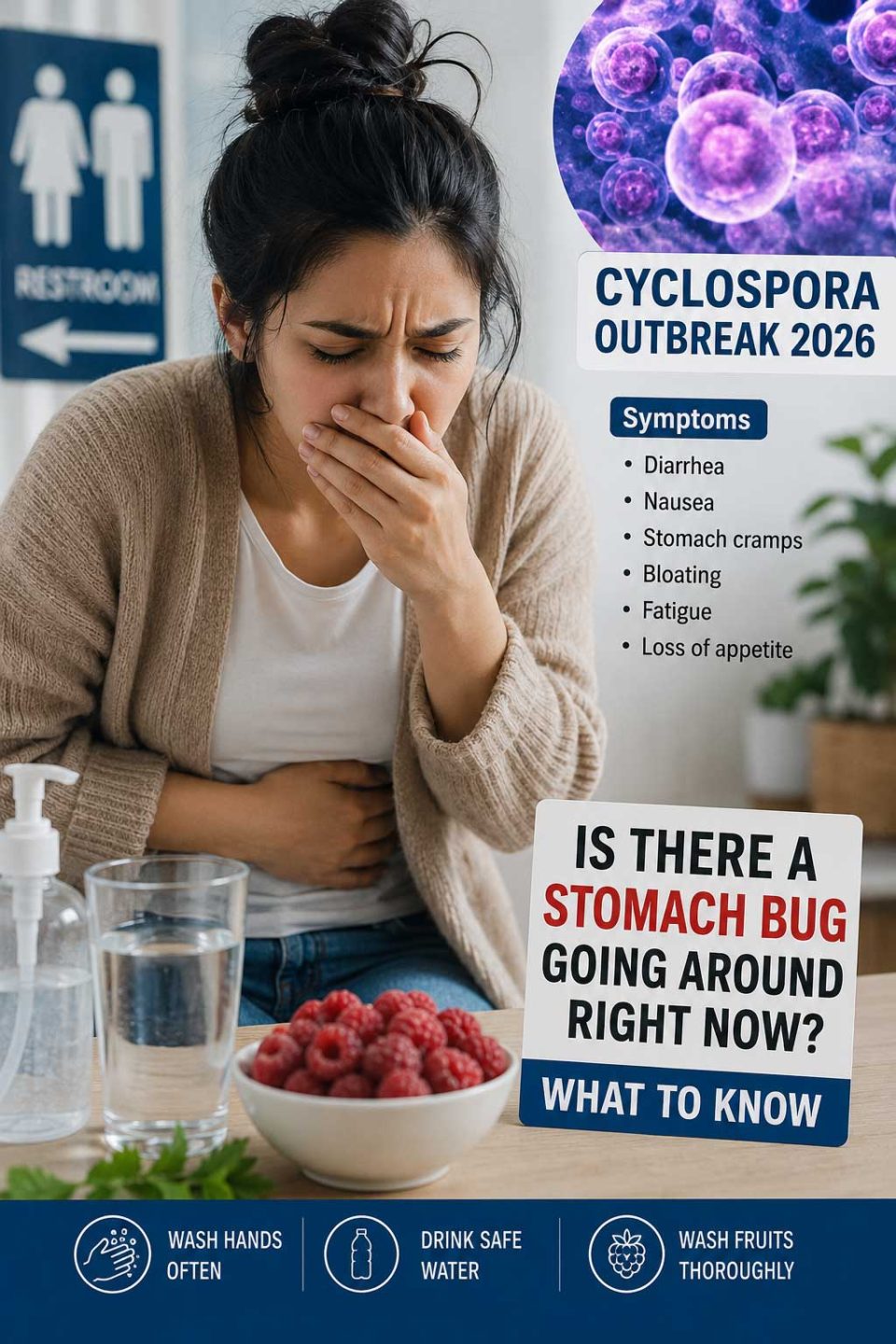
If you are searching “stomach bug going around 2026” — you are not alone. The Cyclospora parasite outbreak is causing a surge in diarrhea cases across the United States. Michigan alone reports over 2,600 cases.
Here is what is going around right now, how to tell if you have it, and when to see a doctor.
What Is Going Around Right Now?
The main stomach illness circulating is Cyclosporiasis — an intestinal infection caused by the Cyclospora parasite.
Unlike norovirus (the classic “stomach flu”), Cyclospora takes about 7 days after exposure to cause symptoms. It also lasts much longer — weeks to months if untreated.
Other stomach bugs circulating include norovirus and enterovirus, but the breakout of Cyclospora is what is driving the current surge in searches.
Symptoms to Watch For
Symptoms appear about one week after exposure:
- Watery diarrhea — 6-10 bowel movements per day at peak
- Severe fatigue — disproportionate to what you would expect
- Stomach cramps and bloating
- Loss of appetite
- Nausea
- Low-grade fever — under 101°F (about 1 in 3 cases)
The key clue is the relapsing-remitting pattern. You feel better for a day, then symptoms return. This is not how most stomach viruses behave.
How to Tell It Apart From a Stomach Virus
Most people assume any stomach upset is a virus. Here is how Cyclospora is different:
- Norovirus hits 12-48 hours after exposure, lasts 1-3 days, resolves completely
- Cyclospora takes ~7 days to appear, lasts weeks if untreated, comes in waves
If you have had diarrhea for more than 3-5 days, especially if it keeps coming back, it is probably not a typical stomach bug.
When to See a Doctor
See a doctor if you have:
- Diarrhea lasting more than 3 days
- Signs of dehydration (dry mouth, little or no urine, dizziness)
- Severe stomach pain
- Fever over 102°F
- Bloody bowel movements
Standard stool tests do not check for Cyclospora. You must specifically ask your doctor for Cyclospora testing — mention the current outbreak.
Treatment
Cyclospora is treated with a course of Bactrim (TMP-SMX) for 7-10 days. Over-the-counter anti-diarrheal medication like Imodium can help symptoms but does not cure the infection.
No antibiotic = no recovery. If you take nothing, symptoms can persist for 6-8 weeks.
How Long Does It Last?
Without treatment: weeks to months. The relapsing pattern can continue for 6-8 weeks.
With treatment (Bactrim): symptoms improve within 2-3 days. Complete the full 7-10 day course even if you feel better.
Some people report fatigue lasting weeks after the infection clears.
Prevention
Until the source is found, take these precautions:
- Cook produce — heat kills Cyclospora
- Avoid raw raspberries, cilantro, and basil during the outbreak
- Wash hands after handling fresh produce
- Wash produce under running water (reduces but does not eliminate risk)
Hand sanitizer does not kill Cyclospora. Use soap and water.
Related: Read the full guide: Cyclosporiasis Outbreak 2026 — Doctor Explains Symptoms, Treatment, and the Raspberry Warning
Sources
Last updated July 13, 2026.
Related Articles
- Coping Mechanisms for Each Stage of Grief and How to Support Someone Going Through Grief.
- 50 Positive Things To Say To Keep Yourself Going Today.
Part of our Infectious Diseases Guide — a complete guide to this topic.
