
This content is for informational and educational purposes only. Always consult a qualified healthcare provider.
Last Updated on July 28, 2026 by Grace Oluchi
Last Updated: July 28, 2026 | Medically Reviewed by Grace Oluchi, Medical Graduate
📋 Table of Contents
Key Takeaways
- Major Pharmaceuticals recalled 12 lots of levothyroxine sodium tablets on July 13, 2026. The FDA classified it as a Class II recall on July 17.
- The tablets are subpotent — they contain less thyroid hormone than the label states.
- Seven strengths are affected: 25 mcg, 50 mcg, 75 mcg, 88 mcg, 112 mcg, 125 mcg, and 150 mcg.
- Do not stop taking your levothyroxine without talking to your doctor first.
- This is the third levothyroxine recall in 12 months — Pfizer/Levoxyl and Alvogen Thyro-Tabs were recalled in 2025.
- Synthroid (the brand name version) has not been recalled.
- Approximately 20 million Americans take levothyroxine daily for hypothyroidism.
What Is Levothyroxine and Why Is It Being Recalled?
Levothyroxine is a synthetic form of the thyroid hormone T4. It is the most commonly prescribed medication for hypothyroidism — a condition where the thyroid gland does not produce enough hormone.
In the United States, nearly 5 out of every 100 people aged 12 and older have hypothyroidism. Most of the estimated 30 million Americans with thyroid dysfunction have this condition. Levothyroxine is the backbone of treatment.
The problem: routine stability testing found that certain batches of levothyroxine sodium tablets did not meet the required potency standards. In plain language, the pills may deliver less thyroid hormone than the dose printed on the label.
This is called a subpotent drug — it is not contaminated or dangerous in the traditional sense. But if a patient takes a pill that is supposed to be 75 mcg and it actually contains only 60 mcg, their hypothyroidism can become undertreated.
The July 2026 Recall: Major Pharmaceuticals
On July 13, 2026, Major Pharmaceuticals (based in Dublin, Ohio, with packaging in Indianapolis, Indiana) initiated a voluntary recall of levothyroxine sodium tablets. The FDA classified it as a Class II recall on July 17, 2026.
Some of these products were also distributed by Cardinal Health (Dublin, Ohio).
Shipping of the affected products began on January 22, 2025.
What Class II means: The FDA defines a Class II recall as a situation where “use of or exposure to a violative product may cause temporary or medically reversible adverse health consequences or where the probability of serious adverse health consequences is remote.”
In plain terms: this is not life-threatening for most patients. But it may cause your hypothyroidism symptoms to return or worsen until you get a properly potent replacement.
Major Pharmaceuticals said it is “not likely to cause adverse health effects.”
Recalled Lot Numbers: Full List
If you take levothyroxine, check your bottle now. Here are the affected lot numbers and expiration dates from the Major Pharmaceuticals recall.
25 mcg Tablets
| Package | Lot Number | Expiration |
|---|---|---|
| 100-count carton (NDC 0904-6949-61) | N02212 | July 2026 |
| 10-count bag (Cardinal Health) | N02212A, N02212B | July 2026 |
| 10-count blister (Cardinal Health) | N02212 | July 2026 |
50 mcg Tablets
| Package | Lot Number | Expiration |
|---|---|---|
| 100-count carton (NDC 0904-6950-61) | N02200 | October 2026 |
| 10-count bag (Cardinal Health) | N02200A, N02200B | October 2026 |
| 10-count blister (Cardinal Health) | N02200 | October 2026 |
75 mcg Tablets
| Package | Lot Number | Expiration |
|---|---|---|
| 100-count carton (NDC 0904-6951-61) | N02172 | July 2026 |
| 100-count carton | N02296, N02288 | December 2026 |
| 10-count bag (Cardinal Health) | N02172A, N02172B | July 2026 |
| 10-count bag (Cardinal Health) | N02288A, N02288B | December 2026 |
| 10-count blister (Cardinal Health) | N02172, N02288 | July/December 2026 |
88 mcg Tablets
| Package | Lot Number | Expiration |
|---|---|---|
| 100-count carton (NDC 0904-6952-61) | N02310 | January 2027 |
112 mcg Tablets
| Package | Lot Number | Expiration |
|---|---|---|
| 100-count carton (NDC 0904-6954-61) | N02203 | September 2026 |
125 mcg Tablets
| Package | Lot Number | Expiration |
|---|---|---|
| 100-count carton (NDC 0904-6955-61) | N02266 | November 2026 |
| 10-count bag (Cardinal Health) | N02266A, N02266B | November 2026 |
| 10-count blister (Cardinal Health) | N02266 | November 2026 |
150 mcg Tablets
| Package | Lot Number | Expiration |
|---|---|---|
| 100-count carton (NDC 0904-6956-61) | N02167 | July 2026 |
| 10-count bag (Cardinal Health) | N02167A | July 2026 |
| 10-count blister (Cardinal Health) | N02167 | July 2026 |
Where to Find the Lot Number on Your Prescription Bottle
Finding the lot number on your prescription bottle depends on how your pharmacy packaged it:
On a standard pharmacy bottle: The lot number is usually printed on the pharmacy label or on the manufacturer’s label on the bottle itself. Look for “LOT” or “Batch” followed by a number.
On a blister pack: The lot number is typically printed on the outer carton or on the individual blister card backing. In the Major Pharmaceuticals recall, the blister pack lot numbers match the carton lot numbers (for example, lot N02212 appears on both the 100-count carton and the 10-count blister).
On a bag pack: Bag lot numbers have an “A” or “B” suffix (for example, N02212A, N02212B). These are usually on the bag label.
If you cannot find it: Call your pharmacy and ask them to check their dispensing records. They can tell you the manufacturer, lot number, and whether your prescription came from an affected supply.
What to Do If You Have a Recalled Lot
Step 1: Do not stop your medication. Stopping levothyroxine abruptly can cause your hypothyroidism symptoms to return or worsen. This is especially dangerous for people with severe hypothyroidism, pregnant women, and children.
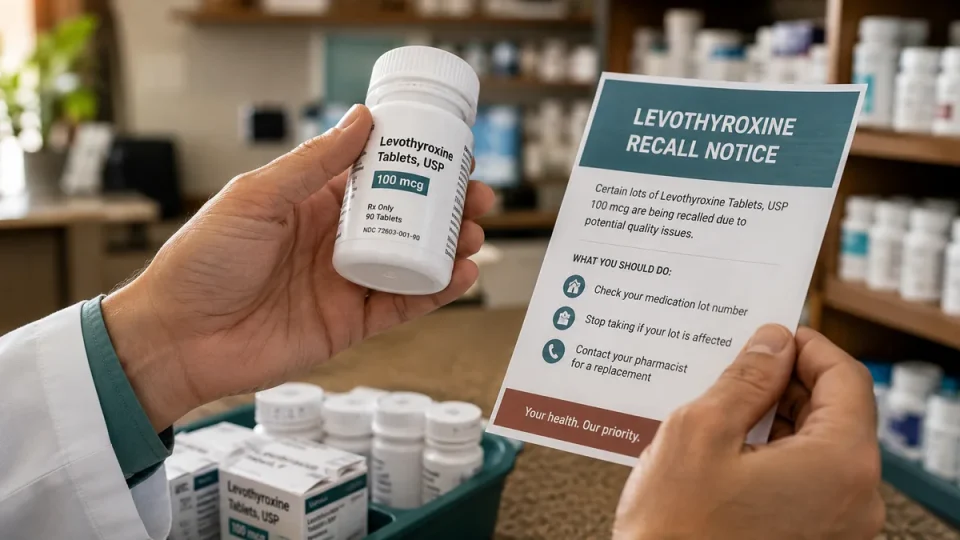
Step 2: Check the lot number. Compare the lot number on your bottle or blister pack against the list above.
Step 3: Call your pharmacy. If your lot matches, call the dispensing pharmacy. They can verify the manufacturer, confirm whether the lot is affected, and arrange a replacement.
Step 4: Contact your doctor. If your lot is recalled, your doctor may want to check your thyroid levels (TSH and free T4) to see if the subpotent tablets affected your treatment. They may also switch you to a different manufacturer or brand.
Step 5: Return the medication. Do not throw it away. Return recalled medication to your pharmacy.
What Does “Subpotent” Mean for Your Health?
A subpotent levothyroxine tablet delivers less thyroid hormone than the label states. This does not mean the medication is contaminated or toxic. It means you may be getting an underdose.
For most adults, a slightly lower dose may not cause immediate symptoms. But over weeks, an underdose can bring back hypothyroidism symptoms:
- Fatigue and low energy
- Weight gain
- Cold sensitivity
- Constipation
- Dry skin and hair
- Difficulty concentrating (“brain fog”)
- Depression
In children, an underdose is more serious. Dr. Abeer Hassoun, a pediatric endocrinologist at Columbia University Medical Center, told Rolling Out that an underdose “can slow growth, delay walking and dull cognitive development, and kids who fall behind on their dose often grow sluggish at school.”
In pregnant women, hypothyroidism can affect fetal brain development. If you are pregnant or planning pregnancy and take levothyroxine, contact your doctor immediately about this recall.
Is Synthroid Recalled?
No. Synthroid — the brand name version of levothyroxine made by AbbVie — has not been recalled in 2026. The recall affects generic levothyroxine sodium tablets manufactured by Major Pharmaceuticals.
If your pharmacist needs to switch you from a recalled generic, they may offer Synthroid as an alternative. However, your insurance may cover the generic at a lower cost. Ask your doctor or pharmacist about options.
Some patients may also know the brand name Levoxyl, which was made by Pfizer. Levoxyl was recalled in August 2025 (see below) and may not be widely available at pharmacies.
Other Levothyroxine Recalls in the Past 12 Months
The Major Pharmaceuticals recall is not an isolated event. Here is every levothyroxine recall since late 2024:
Alvogen/Thyro-Tabs (December 2025 — Ongoing)
On December 31, 2025, Alvogen, Inc. initiated a Class II recall of Thyro-Tabs levothyroxine sodium tablets, 150 mcg. The reason was a product mix-up: a pharmacy reported receiving a bottle labeled as 150 mcg that actually contained 88 mcg tablets.
This is a different kind of error than subpotency — it means a patient taking the bottle as directed would receive the wrong dose entirely.
- Lot: MHA21825
- Expiration: December 31, 2027
- Product: Thyro-Tabs, 150 mcg, 1000 tablets
- Status: Ongoing
- Distributed: Nationwide
If you take Thyro-Tabs brand levothyroxine, check with your pharmacy about this lot.
Pfizer/Levoxyl (August 2025 — Ongoing)
On July 29, 2025, Pfizer recalled 29,004 bottles of Levoxyl levothyroxine sodium tablets, 50 mcg, due to subpotency.
- Lot: 24C11
- Expiration: February 28, 2026
- NDC: 60793-851-01
- Status: Ongoing
- Made in: Austria
This expiration date has passed, so this lot should no longer be in circulation. But if you have old bottles at home, check them.
Lupin Pharmaceuticals (December 2024 — Terminated)
On December 20, 2024, Lupin Pharmaceuticals recalled levothyroxine sodium tablets, 75 mcg, due to failed impurity and degradation specifications during stability testing.
- Lot: LA01276
- Expiration: July 2026
- Quantity: 480 bottles
- Status: Terminated (February 17, 2026)
This recall has been closed. The affected product should no longer be in circulation.
Symptoms of Undertreated Hypothyroidism
If you have been taking a subpotent levothyroxine tablet, your thyroid hormone levels may have dropped below the therapeutic range. Here are the symptoms to watch for:
Early symptoms:
- Increased fatigue
- Unexplained weight gain (2-5 pounds over several weeks)
- Feeling cold when others are comfortable
- Constipation
Moderate symptoms:
- Dry skin and brittle nails
- Hair thinning or hair loss
- Muscle aches and joint stiffness
- Difficulty concentrating
- Depression or low mood
When to see a doctor: If you have been taking any of the recalled lots and notice any of these symptoms returning or worsening, schedule an appointment with your doctor. A simple blood test (TSH and free T4) can tell you whether your thyroid levels are in the right range.
How to Check If Your Medication Is Affected
Not sure if your levothyroxine is from Major Pharmaceuticals? Here is how to check:
Step 1: Look at the bottle or blister pack. Find the manufacturer name. Major Pharmaceuticals may appear as “Major” or “Major Rugby” on the label.
Step 2: Find the lot number. It is usually printed on the pharmacy label or on the manufacturer’s packaging.
Step 3: Match it against the table above. If the lot number and strength match a recalled lot, contact your pharmacy.
Step 4: If you cannot tell, call your pharmacy and ask. They have access to their purchasing records and can tell you the manufacturer and lot number for your prescription.
Step 5: You can also check the FDA recall database at fda.gov/drugs/drug-safety-and-availability/drug-recalls for the most current information.
Which Levothyroxine Manufacturers Are Affected?
The 2026 Major Pharmaceuticals recall covers one manufacturer only. Here is the current status of every major levothyroxine manufacturer in the US:
| Manufacturer | Recall Status | Lot(s) Affected | Reason |
|---|---|---|---|
| Major Pharmaceuticals | Active recall (July 2026) | 12 lots, 7 strengths | Subpotent |
| Alvogen (Thyro-Tabs) | Active recall (Dec 2025) | 1 lot, 150 mcg | Wrong dose in bottle |
| Pfizer (Levoxyl) | Active recall (Aug 2025) | 1 lot, 50 mcg | Subpotent |
| Lupin Pharmaceuticals | Terminated (Dec 2024) | 1 lot, 75 mcg | Impurities |
| Synthroid (AbbVie) | No recall | — | — |
| Amneal Pharmaceuticals | No current recall | — | — |
Amneal Pharmaceuticals: Despite search interest, there is no current FDA recall for Amneal levothyroxine products as of July 28, 2026.
Why Is This Happening So Often?
Three levothyroxine recalls in 12 months raises a fair question: why is this happening?
Levothyroxine is a narrow therapeutic index drug — the difference between an effective dose and an ineffective dose is small. Even minor variations in potency can affect patient outcomes.
The recalls have come from different manufacturers for different reasons:
- Major Pharmaceuticals: subpotency during stability testing
- Alvogen: product mix-up (wrong strength in the bottle)
- Pfizer/Levoxyl: subpotency
- Lupin: impurity and degradation failures
This pattern suggests quality control challenges across multiple generic manufacturers, not a problem with levothyroxine itself. The drug remains safe and effective when manufactured properly.
Dr. Hassoun noted that endocrinologists routinely test patients’ hormone levels regardless of what a package promises, “catching underdosing either way.” But patients who only get their thyroid checked once or twice a year may not catch a potency problem quickly.
Should You Switch to Synthroid?
This is a question many patients are asking. Here are the factors to consider:
Arguments for staying on generic levothyroxine:
- Generic levothyroxine is the standard of care and is prescribed to millions of people safely
- Most generic levothyroxine is not affected by recalls
- Your insurance likely covers it at a lower cost
- Switching brands may require a new prescription and a new blood test
Arguments for switching to Synthroid:
- Synthroid has not been recalled
- Brand name medications have stricter quality control standards
- If you have been on a recalled lot, your doctor may want to switch you temporarily while the recall is resolved
The bottom line: Talk to your doctor before making any changes. Do not switch on your own.
How to Protect Yourself Going Forward
The levothyroxine recall is a reminder of a few important practices:
- Check your lot number every time you pick up a new prescription
- Keep the packaging until you confirm the lot is not recalled
- Report problems to the FDA at fda.gov/safety/medwatch or call 1-800-FDA-1088
- Ask your pharmacy which manufacturer they source from
- Get your thyroid levels checked at least once a year if you take levothyroxine — more often if you notice symptoms
- Do not stockpile levothyroxine. The shelf life is limited and stockpiling contributes to shortages
When to See a Doctor
See your doctor if:
- You take any of the recalled lots and notice symptoms returning
- You are pregnant or planning pregnancy and take levothyroxine
- You are unsure whether your medication is affected
- You need a new prescription and your pharmacy cannot provide a replacement
- You have been feeling more tired, gaining weight, or feeling cold lately
Seek emergency care if:
- You experience chest pain or shortness of breath
- You have severe swelling in your face or throat
- You have an irregular or very fast heartbeat
- You faint or have seizures
These are rare but possible signs of severe hypothyroidism (myxedema coma) and require immediate medical attention.
Sources
Frequently Asked Questions
What should I do if I notice these symptoms?
If you notice any of the symptoms discussed in this article, schedule an appointment with your doctor. Early detection and treatment can prevent complications. Do not wait for symptoms to worsen.
How common is this condition?
This condition affects millions of people worldwide. According to the CDC, prevalence has increased significantly in recent years. You are not alone, and effective treatments are available.
Can this be prevented?
While not all cases are preventable, lifestyle changes including regular exercise, a balanced diet, adequate sleep, and stress management can significantly reduce your risk. Talk to your doctor about personalized prevention strategies.
- FDA Drug Recalls — fda.gov/drugs/drug-safety-and-availability/drug-recalls
- FDA Enforcement Report D-0259-2026 (Alvogen)
- FDA Enforcement Report D-0575-2025 (Pfizer/Levoxyl)
- FDA Enforcement Report D-0167-2025 (Lupin)
- Rolling Out — “Thyroid drug potency problem triggers urgent nationwide recall” (July 27, 2026)
- WFTV/WSPB — “FDA issues Class II recall for subpotent Levothyroxine tablets” (July 27, 2026)
- Prevention — “FDA Recalls Popular Thyroid Medication Nationwide” (July 25, 2026)
- Passion Health Physicians — “Levothyroxine Recall 2026: A Primary Care Guide for Patients” (July 27, 2026)
- National Institute of Diabetes and Digestive and Kidney Diseases (NIDDK) — Hypothyroidism statistics
- American Association of Clinical Endocrinology — Hypothyroidism prevalence data
This article will be updated as new information becomes available. Last updated: July 28, 2026.
Bottom Line
Always consult a qualified healthcare provider for personalized advice.
