
Affiliate Disclosure: This article contains affiliate links. If you buy through one of them we may earn a commission, at no extra cost to you. We only recommend products we genuinely believe in. As an Amazon Associate I earn from qualifying purchases.
Medical Disclaimer: This content is for informational and educational purposes only and is not medical advice. Always consult a qualified healthcare professional before making health decisions or starting any new treatment.
Fitness during menopause is a very important thing to start during menopause. Menopause is a natural, biological change in a woman’s body, where her ovaries stop producing eggs.
It usually starts around the age of 45 to 50. But it can also happen at 40 years old. Many things happen when a menopause begins. This shift in hormones can lead to various physical and emotional changes.
- Like weight gain
- Stiff joints
- A decrease in bone density
- And intense mood swings
Exercising regularly when you hit menopause is crucial.
It can help do the following things,
- Manage your symptoms
- Help you stay healthy
- And keep living a beautiful life.
Safe and effective ways to practice <a href="https://medspurs.com/category/fitness-and-diet/” class=”il-link”>fitness during menopause
Aerobic training
According to studies, you should aim for at least a hundred or a hundred and fifty minutes of exercise every week.
BUT, you can start with 10 minutes a day.
Physical activities like:
- Walking
- Brisk walking
- Cycling
- Jogging
- Swimming
- And dancing
They are great cardio workouts you can start doing 10 minutes a day. Obviously, some might take more time, like swimming.
Swimming is fun, and even more fun if you’re a great swimmer.
So, you definitely won’t be swimming for just 10 minutes!
However, if that’s what you want, you are free to do that too.
10 minutes is to show you that you can still make the smallest time to exercise. And if you do have enough time, but still want 10 minutes, that’s equally fine.
Eventually, you can increase the duration and intensity of your exercises.
diet-the-ultimate-guide-for-a-healthier-you/" class="il-link">Strength training
You can aim for 2 to 3 strength training sessions a week.
Target areas like:
- Your back
- Legs
- Hips
- Chest
- Shoulders and arms.
And exercises like:
- Squats
- Lunges
- Push-ups
- And rows
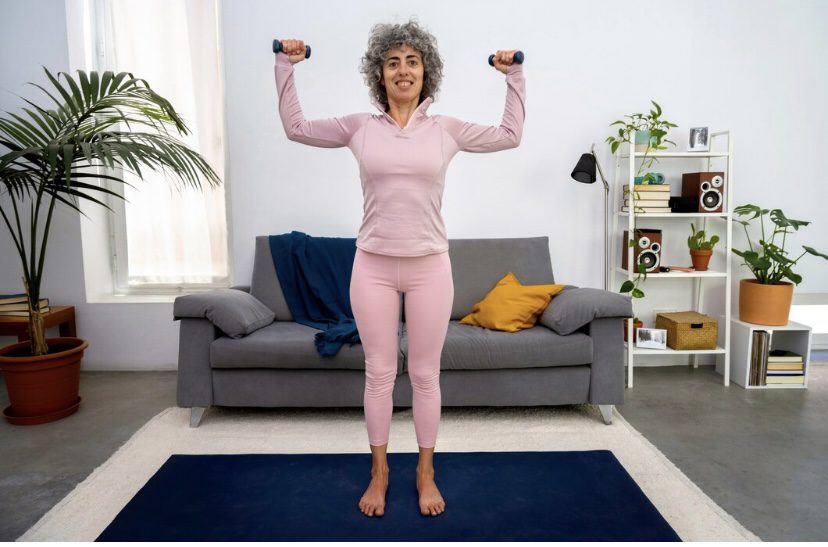
Lifting weights is something you should do, and it is really beneficial for your health.
- Especially during menopause.
Strength training has several health benefits:
- Helps you maintain muscle mass
- Speeds up your metabolism
- Improve bone density and protect you against sarcopenia
- It can help you sleep better
- Improve your mood and reduce <a href="https://medspurs.com/category/mental-health/” class=”il-link”><a href="https://medspurs.com/category/mental-health/” class=”il-link”>anxiety
- And reduce your risk of heart disease
Above all, strength training helps you get stronger during menopause.
And keeps you healthy.
You can also do body weight exercises if you don’t have weights to use.
Examples are:
- Planks
- Body weight squats
- Air squats
- Sumo squats
- Glute-bridges
- Superman arm extension
- Burpees
- Mountain climbers
- Bird dog
- Reverse crunch
- Forward lunges
- Calf raises
HIIT
High-intensity interval training, HIIT for short, is when you do an exercise intensely, followed by short periods of rest.
It is really great for your heart and improves your metabolism.
Pelvic floor exercises
They are very effective for strengthening your pelvic floor muscles.
These muscles support various things in your body, such as your,
- Bladder
- Uterus
- And rectum
They can become weak due to the hormonal changes that happen during menopause.
So, doing pelvic floor exercises can help:
- Improve your bladder control
- Reduce the risk of prolapse
- And improves your sexual health
Balance and flexibility exercises
These are exercises that improve your stability and flexibility.
Examples are yoga and Pilates.
They can reduce your risk of falls and injuries as you grow older.
<a href="https://medspurs.com/category/top-<a href="https://medspurs.com/category/top-<a href="https://medspurs.com/category/top-tips/” class=”il-link”>tips/” class=”il-link”>tips/” class=”il-link”>Tips for practicing fitness during menopause
Frequently Asked Questions
What should I do if I notice these symptoms?
If you notice any of the symptoms discussed in this article, schedule an appointment with your doctor. Early detection and treatment can prevent complications.
How common is this condition?
This condition affects millions of people worldwide. According to the CDC, prevalence has increased in recent years. Effective treatments are available.
Can this be prevented?
While not all cases are preventable, lifestyle changes including regular exercise, a balanced diet, adequate sleep, and stress management can reduce your risk. Talk to your doctor about personalized prevention strategies.
1 . You can begin with 10 minutes a day.
2 . Start slowly and gradually increase the intensity of your workouts. You don’t have to rush the whole thing.
3 . Please listen to your body and adjust whatever needs to be adjusted.
HIITs, for example, are very intense, and even though they’re on the list, you don’t need to open the scene with them.
4 . Always drink water.
5 . You can stay active without feeling like you’re “working out”. The gym is not a must; just pick things you enjoy. Whether it’s walking, dancing, swimming, or riding a bicycle.
6 . Meet up with your doctor or a fitness expert to build a good plan for you.
7 . It’s okay if you don’t feel motivated sometimes. But remember, you are your own project, and you deserve to win. Stick to the plan, and not YOUR MOOD.
8 . Try to sleep for 8 hours (more if you can). It is very important for your health, especially when you reach menopause.
