
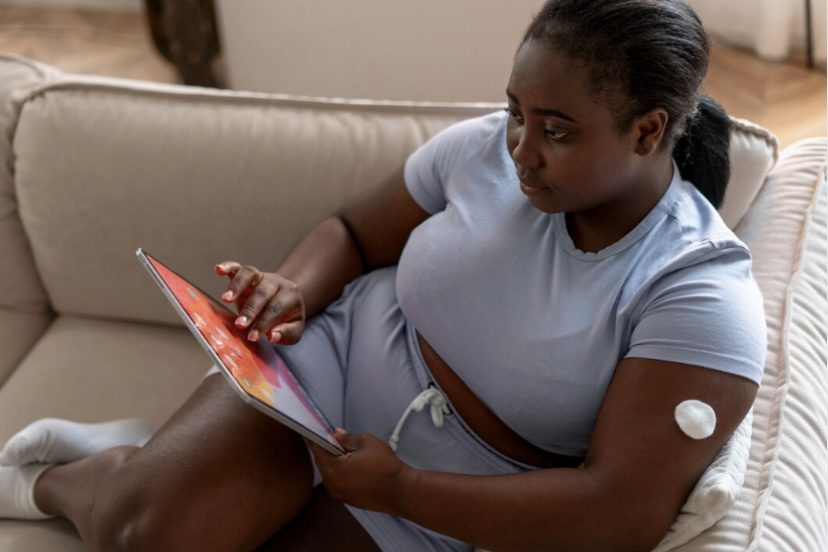
Monitoring your health at home is genuinely useful — it gives you information between GP appointments, helps you track conditions that change day to day, and gives you early warning when something needs attention. But there is one thing most guides on this topic skip over entirely, and it matters.
The Accuracy Problem
Consumer health devices vary dramatically in their clinical accuracy. A blood pressure monitor that produces plausible-looking numbers is not the same as one that has been independently validated against clinical-grade equipment. An inaccurate device can give one a false reassurance, telling you your blood pressure is fine when it is not, or generate unnecessary anxiety over readings that are simply wrong.
For blood pressure monitors specifically, the British Hypertension Society, and the European Society of Hypertension maintain publicly available validated device lists. Before buying a blood pressure monitor, check whether the model you are considering appears on one of these lists. It takes two minutes, and meaningfully changes the value of the device.
The same principle applies to glucose meters. If you have diabetes, check that your meter meets the ISO 15197 accuracy standard, and confirm with your GP or diabetes nurse which device they recommend for your situation.
Devices Worth Having
1 . Blood pressure monitors: A blood pressure monitor is valuable for anyone with hypertension, a family history of heart disease, or anyone over 40 who wants to keep track. Upper-arm cuffs are generally more accurate than wrist monitors. Measure at the same time each day, sit quietly for five minutes first, and record readings rather than reacting to single results.
2 . Buy smart scales: Put these in your house, they’re actually pretty useful. They can track your weight, and can also measure your body fat.
- Simply great for taking care of your general health.
3 . Glucose meters: It’s also called a glucometer, and it is a medical device that can tell you how much sugar is in your blood.
- If you have diabetes, you should get this.
Other home health monitoring services that are good to have.
Pulse oximeters: It is a handheld clip device that can measure how much oxygen flows through your blood.
- They’re really helpful, for someone with breathing problems.
Activity trackers: These ones can help you want to stay active. They track,
You can buy,
- Wrist bands.
- Smart watches.
- And even clip-on trackers.
Even phones are home health monitoring devices too.
- They can also help you monitor your health.
Some phones have an inbuilt health app that can track your,
- Activity (such as steps, calories, resting energy, active energy, walking +running distance)
- Menstrual cycle (if it’s light, medium or heavy)
- Sleep (like your time in bed)
- State of mind ( like your momentary emotions or daily moods)
If your phone doesn’t come with these things, you can download them.
But, you would need to carry your phone with you wherever you go.
Things to know before getting these devices
1 . Check if they work with your phone or computer.
2 . Read reviews to see what other people are saying about the devices.
If a platform doesn’t have a review section at all, don’t bother buying. But, if it does have one but no one has written anything, it might be risky to buy.
3 . Ask your doctor to recommend any good home health monitoring devices for you.
4 . Read their privacy policies, so you can know how your personal data is being used.
- And protected.
5 . You can buy one thing first, you don’t have to buy everything.
The bottom line
Home health monitoring devices can be helpful, but you got to choose well. Buy what you need, and not something you’ll forget about the next day.
