
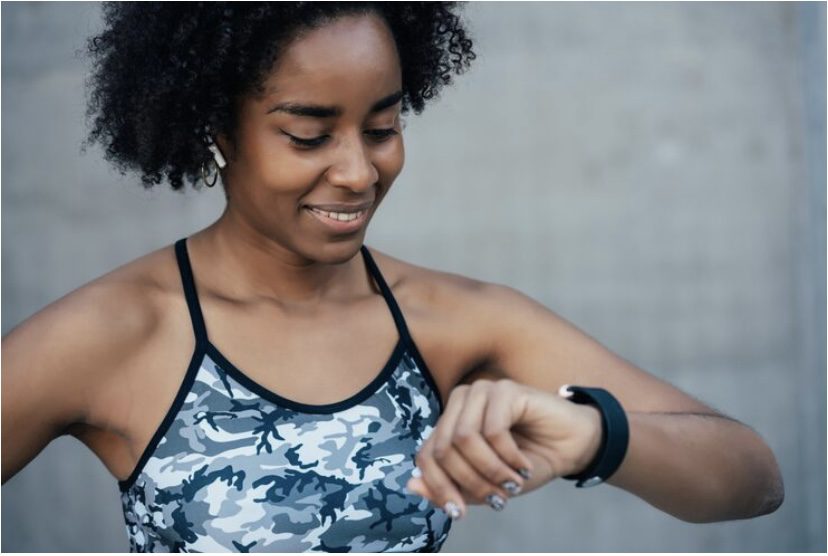
Fitness trackers and wearables can be great tools. They track your steps, monitor your heart rate, measure your sleep, and give you data about your daily habits. Used well, they can keep you motivated and help you see patterns in how you move and rest.
What makes using fitness trackers and wearables valuable?
The benefits of using fitness trackers are that they can help you:
Track your progress and help you keep up with daily activities, know how much sleep you’re getting, and know how much progress you make in your workouts.
Stay positive and determined, cause you’ll receive reminders and notifications (8an invisible bestie, which can give you the strength to keep going.
Also, they can help you set goals that you can achieve. Say you want to start walking 7k steps every day, using fitness trackers and wearables can help you along the way. Or you want to reach a certain level with exercise, they can help you with that, too.
Above all, the great thing about using fitness trackers and wearables is that they can keep you from guessing or being in the dark about your fitness goals.
They do help with a lot of things, and having them is worth the investment.
Key features of fitness trackers and wearables
These are the cool things you should know about them, at least you need to know what you’ll be buying.
1 . Using them can help you keep track of your daily steps and the distance you cover.
2 . They can track your heart rate and rhythm in that current moment.
3 . If you like swimming a lot, running, cycling, or doing other outdoor activities, they can help you monitor them.
Tips to know about using fitness trackers and wearables
It’s important that you know how to use them well.
The first thing is to set your goals, but they should be realistic, and then you start tracking your progress.
You’ve also got to wear it consistently, so that you can keep up with your daily activities and sleep patterns.
Also, it can be helpful to link it with your phone, laptop, or computer; sync your data with them, so you can track your progress. And, you can set new goals when you feel the need to do so.
How to make a decision when choosing the right fitness tracker or wearable
It’s not a lot. You just need to look at your fitness goals, the activities you enjoy a lot, and the features you prefer.
They are many types, so you need to look at different fitness trackers and wearables, compare things like:
- Battery life
- Accuracy
- Compatibility
It’s similar to when you want to buy a phone, you consider the things or specs you want, and then you make a decision.
Types Of Fitness Trackers And Wearables
There are different types, and they do different things, so it’s best to know what they do.
Let’s start with Basic Fitness Trackers: Examples are the Fitbit Inspire 3 and the Xiaomi Smart Band 8. They can help you track the steps you take, how much distance you cover, the calories you burn, and your heart rate.
The Advanced Fitness Trackers: They have added features like GPS, tracking how often you stress, and monitoring the way you sleep. Garmin Vivoactive 5 and Fitbit Charge 6 are good examples.
Then, GPS Fitness Trackers: Garmin Forerunner 265, Coros Apex 2, have built-in GPS. This can help with a more accurate calculation of the distance you cover when doing your outdoor activities.
Wearables
Sleep monitors: They focus on helping you monitor your sleep quality and give you ways to improve it. Examples are Whoop 5.0 and Oura ring gen 4.
Heart rate monitoring wearables: Fitbit Charge 6 and Garmin Venu 3 can track your heart rate and the pattern of your heartbeats.
Smart rings: They’re small, ring-shaped wearables that track your physical health. Some examples are Ultrahuman ring air, and Oura ring gen 4.
Smartwatches
Sports smartwatches: They’re designed for certain sports like running, cycling, or swimming. Examples are Garmin forerunner 965 and Polar ignite 3.
Apple Watch Series 10 can help monitor your blood pressure and blood sugar levels.
Samsung Galaxy Watch 7 has a mix of fitness and smartwatch abilities.
The risk most people don’t know about (tracker dependency)
Frequently Asked Questions
What should I do if I notice these symptoms?
If you notice any of the symptoms discussed in this article, schedule an appointment with your doctor. Early detection and treatment can prevent complications.
How common is this condition?
This condition affects millions of people worldwide. According to the CDC, prevalence has increased in recent years. Effective treatments are available.
Can this be prevented?
While not all cases are preventable, lifestyle changes including regular exercise, a balanced diet, adequate sleep, and stress management can reduce your risk. Talk to your doctor about personalized prevention strategies.
Here is something worth knowing before you invest in one. Some people find that over time, they become so focused on their tracker data that they stop exercising if the device is broken, out of battery, or showing discouraging numbers. The exercise itself stops feeling like the point. The data becomes the point.
If you notice yourself skipping workouts because your tracker is not charged, or feeling distressed when the numbers look bad, that is a sign the tool has flipped from helpful to harmful. Your fitness should be something you do because you want to feel well, not because a device tells you to.
Use trackers to support your habits, but don’t let them replace the internal motivation that makes fitness sustainable long term. And if wearing one genuinely increases your anxiety about your health, take it off. Your peace of mind matters more.
The point
Using fitness trackers and wearables can give you data, which can be helpful to understand the things you do and how you act over time. The important thing is that they encourage and help you live a healthy life, and make good lifestyle changes where necessary.
However, if wearing fitness trackers or wearables starts to increase your stress and anxiety about life… Just take it off, stop wearing it, and sell it if you can. Your peace of mind is important.
Related Articles
- Pruney Fingers: Why They Happen, When to Worry, and Doctor-Backed Fixes
- Fitness for beginners : Simple routines to start moving
Sources
Bottom Line
Always consult with a qualified healthcare provider for personalized advice. Early detection and proper management are key to maintaining good health.
When to See a Doctor
Consult a healthcare provider if you experience symptoms that persist for more than two weeks, interfere with daily activities, or worsen despite home treatment.
